We rarely think twice about water when it comes out of the tap. We drink it, cook with it, wash dishes, take showers, and use it for countless little things throughout the day. Yet the quality of that water can have a surprisingly big effect on everyday life. Hardness, sediment, chlorine, minerals, and other impurities may change the taste, leave marks on fixtures, or slowly affect household appliances.
That’s why understanding water treatment is worth the effort. It doesn’t necessarily mean buying the biggest or most expensive system available. In fact, the smartest approach is usually much simpler: find out what’s actually in your water, then choose a solution designed for that particular problem.
Why Water Quality Deserves More Attention
Water can look perfectly clear and still contain substances you’d rather not have in it. Depending on where you live and whether your home uses municipal water or a private well, the composition can vary quite a bit.
Some households struggle mainly with hard water. Others notice unpleasant tastes or odors. Sediment can become an issue in areas with older plumbing, while well water may have naturally occurring minerals or other contaminants.
These issues don’t always create an immediate problem. Sometimes they show up slowly — a crust around the faucet here, a cloudy glass there, or a water heater that seems to lose efficiency over the years. Eventually, those small annoyances add up.
Understanding Hard Water
Hard water is one of the most common concerns homeowners encounter. It contains higher levels of minerals, particularly calcium and magnesium. These minerals aren’t necessarily harmful at normal levels, but they can be rough on plumbing and appliances.
You might notice white spots on dishes after washing them or soap that doesn’t seem to rinse away properly. Shower doors can develop stubborn mineral stains, too. And inside pipes or heating equipment, mineral scale can gradually accumulate.
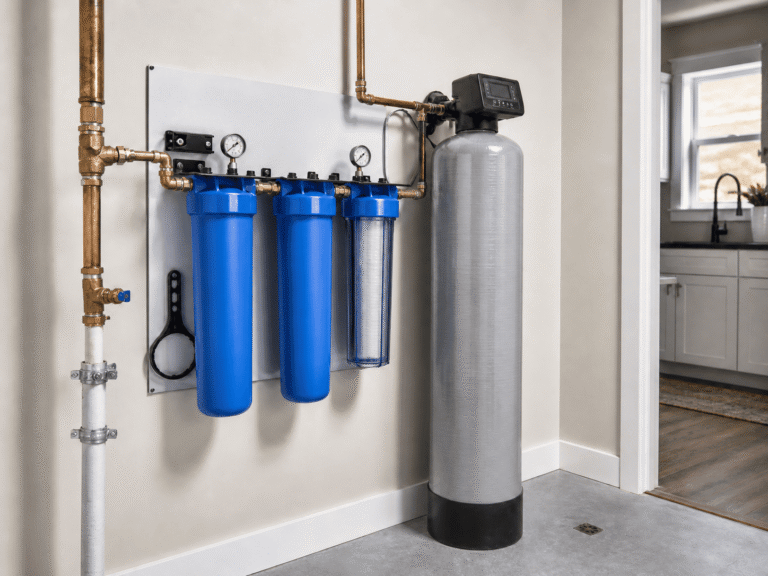
For many homes, water softeners provide a practical way to manage this problem. Most traditional systems use ion exchange to reduce calcium and magnesium in the water. The result can be softer-feeling water, less scale buildup, and easier cleaning.
But there’s an important distinction: a softener is not a complete purifier. It tackles hardness, not every possible contaminant.
Where Filtration Fits In
Filtration serves a different purpose. Depending on the type of filter, it can reduce sediment, chlorine, unpleasant tastes, odors, and certain other contaminants.
A sediment filter is relatively straightforward. It catches physical particles such as sand, dirt, or rust before they move further through the plumbing. Activated carbon filters are popular for improving taste and reducing certain chemicals.
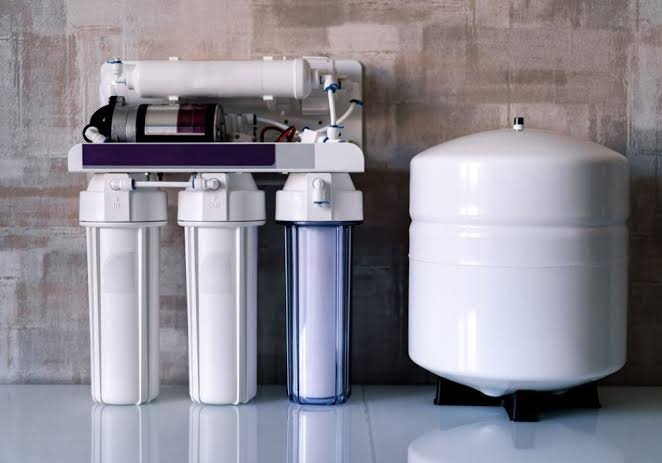
More advanced systems are available when a home has specific water-quality concerns. Reverse osmosis, for example, can remove a wide range of dissolved substances, although it isn’t necessary for every household.
The key is knowing what the equipment is actually designed to remove. Water filtration is a broad term, and two filters can have completely different capabilities. Reading performance specifications and certifications is much more useful than relying on a flashy product label.
Start With a Water Test
Before choosing equipment, test the water. It sounds obvious, yet plenty of homeowners skip this step and buy a system based on a neighbor’s recommendation or an online advertisement.
That can backfire.
A water test can reveal hardness levels, pH, iron, nitrates, bacteria, and other characteristics depending on the test being performed. Once you have those results, you can make a much more informed decision.
If your main issue is hard water, a softener may be enough. If sediment and taste are the concerns, filtration might make more sense. If several problems appear together, a combination of technologies could be the better route.
In other words, don’t treat the symptoms before you know the cause.
Whole-House or Point-of-Use?
Another decision homeowners face is where the system should be installed.
A whole-house system treats water as it enters the property. This can be useful when you want improved water quality throughout the house — not just at the kitchen sink.
Point-of-use systems are more targeted. An under-sink filter, for instance, focuses on the water used for drinking and cooking. These systems can be simpler and less expensive, especially when the concern is limited to drinking water.
Neither approach is automatically better. It comes down to your water quality, household needs, budget, and the specific contaminants you’re trying to address.
Maintenance Shouldn’t Be an Afterthought
Buying a treatment system is only the beginning. Filters need replacing. Softener components may require maintenance. Some systems need periodic cleaning or inspection.
A neglected system can gradually lose effectiveness. Worse, homeowners sometimes assume that because a system is installed, the water will remain perfect forever. It doesn’t work that way.
Keep a record of filter changes and follow the manufacturer’s maintenance recommendations. If the water suddenly tastes different, develops an unusual odor, or changes appearance, don’t simply ignore it.
A Practical Approach to Cleaner Water
There’s no single water solution that works for every home. That’s actually good news, because it means you can build a system around your real needs rather than paying for technology you don’t require.
Start with testing. Understand whether hardness, sediment, taste, microorganisms, or another issue is affecting your supply. Then compare solutions based on what they are genuinely designed to do.
Clean, pleasant water can make everyday routines feel a little easier. Your dishes look better, showers feel nicer, appliances may stay in better condition, and that glass of water on the kitchen counter tastes the way it should.
You don’t need to turn water quality into a complicated project. Just take it one step at a time, know what you’re dealing with, and choose accordingly. That’s often the difference between buying a system and actually solving a problem.