What Your Water Is Telling You: When to Test, Treat, or Soften It
There’s something easy to take for granted in a home: turning on the tap and expecting the water to be fine. Most of us don’t think twice about it. We drink it, cook with it, shower in it, wash clothes with it, and move on with the day. But water can look perfectly clear and still contain minerals, sediments, chemicals, or other substances that affect its taste, smell, plumbing, and overall quality.
That’s why understanding your household water is worth the effort. You don’t necessarily need an expensive system or a complicated setup. Sometimes, the smartest first step is simply finding out what’s actually in your water.
Start With the Water You Already Have
Water quality can vary dramatically from one home to another. Municipal water goes through treatment before reaching your property, but its characteristics can still change as it travels through pipes. Well water, meanwhile, can be influenced by local soil, groundwater conditions, nearby agriculture, and seasonal changes.
You might notice obvious signs, such as a metallic taste, cloudy water, a rotten-egg smell, or white deposits around faucets. Other issues are less visible. Hardness, for example, doesn’t usually make water look dirty, yet it can quietly leave scale inside pipes and appliances.
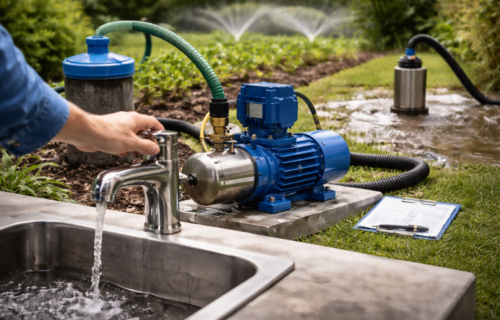
If you’re unsure about your home’s water quality, it’s sensible to schedule a water test before buying equipment. Testing gives you useful information instead of making you guess. It can identify things such as hardness, pH, iron, manganese, chlorine, sediment, and—in some situations—specific contaminants that require more specialized analysis.
Why Water Testing Matters More Than Guesswork
Walking into a store and choosing a filtration system because the box promises “cleaner water” sounds simple. It isn’t always the best approach.
Different water problems require different solutions. A filter designed primarily for sediment won’t necessarily solve hard water. A softener isn’t intended to remove every contaminant. And a reverse osmosis system, while useful for certain applications, may be unnecessary if your actual concern is mineral buildup throughout the house.
A proper test helps connect the problem to the solution. Think of it like taking your car to a mechanic because something sounds strange. You wouldn’t replace the entire engine before finding out what’s wrong. Water treatment deserves the same practical approach.
For homeowners, testing can also establish a baseline. If you have a private well, periodic testing becomes especially important because groundwater conditions can change over time.
Understanding What Water Treatment Really Means
The phrase “water treatment” covers a surprisingly wide range of technologies. It isn’t one single machine that fixes every possible water issue.
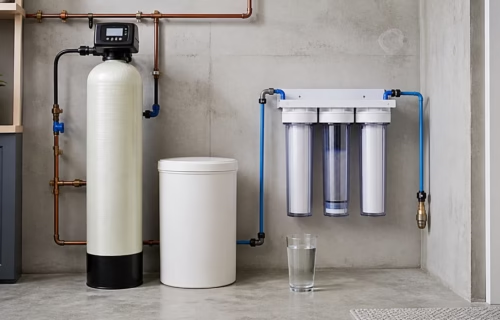
Depending on the results of your test, water treatment might involve sediment filtration, activated carbon, iron removal, UV disinfection, reverse osmosis, or another specialized process. Some homes may need a combination of methods. Others may only need a simple filter at the kitchen sink.
This is where professional advice can save you money. The right system should be matched to your water source, household size, usage patterns, plumbing setup, and the specific substances that need attention.
There’s also a difference between treating water for drinking and treating water throughout the home. A point-of-use system may be enough if your concern is primarily drinking and cooking water. Whole-home treatment makes more sense when the issue affects bathing, laundry, fixtures, appliances, or the plumbing itself.
Hard Water Is a Different Kind of Problem
Hard water is one of the most common household water concerns, especially in areas with naturally mineral-rich groundwater. It usually contains higher levels of calcium and magnesium.
These minerals aren’t necessarily something that makes water look alarming. The trouble tends to show up gradually.
You may notice chalky deposits on showerheads and faucets. Soap may not lather as easily. Glassware can come out of the dishwasher with spots. Over time, mineral scale can build up inside water heaters, pipes, and appliances.
A water softener is specifically designed to address hardness by reducing the concentration of hardness minerals in household water. For many families, the biggest benefit isn’t dramatic overnight transformation. It’s the slow disappearance of those everyday annoyances—the crusty faucet, stiff-feeling laundry, extra scrubbing, and scale inside appliances.
Not Every Water Problem Needs the Same Fix
One common mistake is assuming that a single product can solve everything. Water simply doesn’t work that way.
If your primary concern is sediment, a sediment filter may be appropriate. Chlorine and certain taste or odor issues can often be addressed with activated carbon. Hardness calls for a softening approach. Certain dissolved contaminants may require more specialized filtration or membrane technology.
And then there are issues that shouldn’t be treated casually. If testing identifies a potentially harmful contaminant, homeowners should rely on qualified water professionals and appropriate treatment technology rather than internet hacks or improvised solutions.
The good news is that you don’t have to become a water chemistry expert. You just need enough information to ask the right questions.
Pay Attention to the Small Signs
Your home often gives you clues before you ever order a laboratory report.
Keep an eye out for:
- White or chalky deposits around faucets.
- Unusual odors or tastes.
- Water discoloration.
- Frequent sediment in fixtures.
- Soap that seems difficult to rinse away.
- Spots on dishes and shower doors.
- Appliances that develop scale unusually quickly.
- Changes in private well water after heavy rain or seasonal shifts.
None of these signs automatically tells you exactly what’s wrong. They’re clues, not diagnoses. Still, they’re worth noticing.
If something about your water has changed recently, don’t simply shrug it off. A small change may have a straightforward explanation, but testing can provide peace of mind and a clearer direction.
Choosing a Solution With the Long Term in Mind
The cheapest system isn’t always the least expensive choice over several years. Maintenance, replacement filters, water usage, salt consumption, electricity, installation, and expected lifespan all matter.
It’s also important to think about where the treatment occurs. A drinking-water system and a whole-home system serve different purposes. Likewise, treating hardness at the point where water enters the house is very different from trying to manage mineral buildup at individual fixtures.
A good installation should fit naturally into your home rather than becoming another daily chore. You should know what maintenance is required, how often components need replacement, and what changes you should expect in water quality.
Better Water Starts With Better Information
Water treatment doesn’t have to feel mysterious or overwhelming. In many cases, the process is surprisingly straightforward: understand your water source, test the water, identify the actual problem, and choose a solution designed for that problem.
The important thing is not to buy the biggest system or chase the latest technology. It’s to make an informed decision based on what your household actually needs.
After all, water is part of almost everything you do at home. A little attention now can help protect your plumbing, appliances, and everyday comfort for years to come. Sometimes the best improvement begins with something as simple as asking, “What’s really in my water?”