There’s something easy to overlook about water because it arrives so quietly. Turn on the tap, fill a glass, rinse the vegetables, take a shower. Most of the time, we don’t stop to think about what’s actually moving through those pipes.
Then one morning the coffee tastes a little strange. Soap doesn’t seem to rinse away properly. There are white marks around the faucet, or the kettle starts collecting a chalky layer. These small annoyances can be signs that your household water has characteristics worth paying attention to.
Improving water quality doesn’t necessarily mean buying the biggest or most complicated treatment setup available. It’s really about understanding your water, identifying the problems that matter, and choosing equipment that matches the way your household uses it.
Start With the Water You Actually Have
Every home has a slightly different water story. Municipal supplies can vary by location, while private wells may have their own mix of minerals and other naturally occurring substances. Even two neighboring homes can experience different issues because of plumbing, fixtures, or building age.
That’s why guessing can get expensive. A system designed primarily for hard water won’t necessarily address every other water-quality concern. Likewise, a filtration system may solve one issue while leaving another untouched.
A water test is a sensible first step. It can provide information about hardness, pH, iron, sediment, and other characteristics. Once you know what you’re dealing with, the equipment decision becomes much less of a shot in the dark.
Why Hard Water Gets So Much Attention
Hard water is one of the most common household complaints, particularly in areas where groundwater contains higher levels of calcium and magnesium. These minerals aren’t usually something you can see floating in the water. Their effects tend to show up over time instead.
You might notice scale around showerheads, faucets, coffee makers, and water heaters. Laundry can feel less soft, and soap may not lather as easily as you expect. If you’ve ever scrubbed a stubborn white ring from a bathroom fixture, you’ve probably met hard-water scale before.
For households dealing with these problems, water softeners can be an effective way to reduce hardness and make everyday water use more comfortable. The right setup can also help limit mineral buildup in plumbing and appliances. Still, sizing matters. A system that’s too small may struggle during busy periods, while an oversized unit may be unnecessary for a smaller household.
Whole-Home Filtration Is About More Than Drinking Water
A common mistake is thinking about water treatment only in terms of what comes out of the kitchen faucet. But water enters the house at one point and then travels to showers, bathrooms, laundry areas, appliances, and outdoor connections.
If sediment, unpleasant taste, or certain unwanted substances are present throughout the supply, treating only one faucet may not address the broader problem.
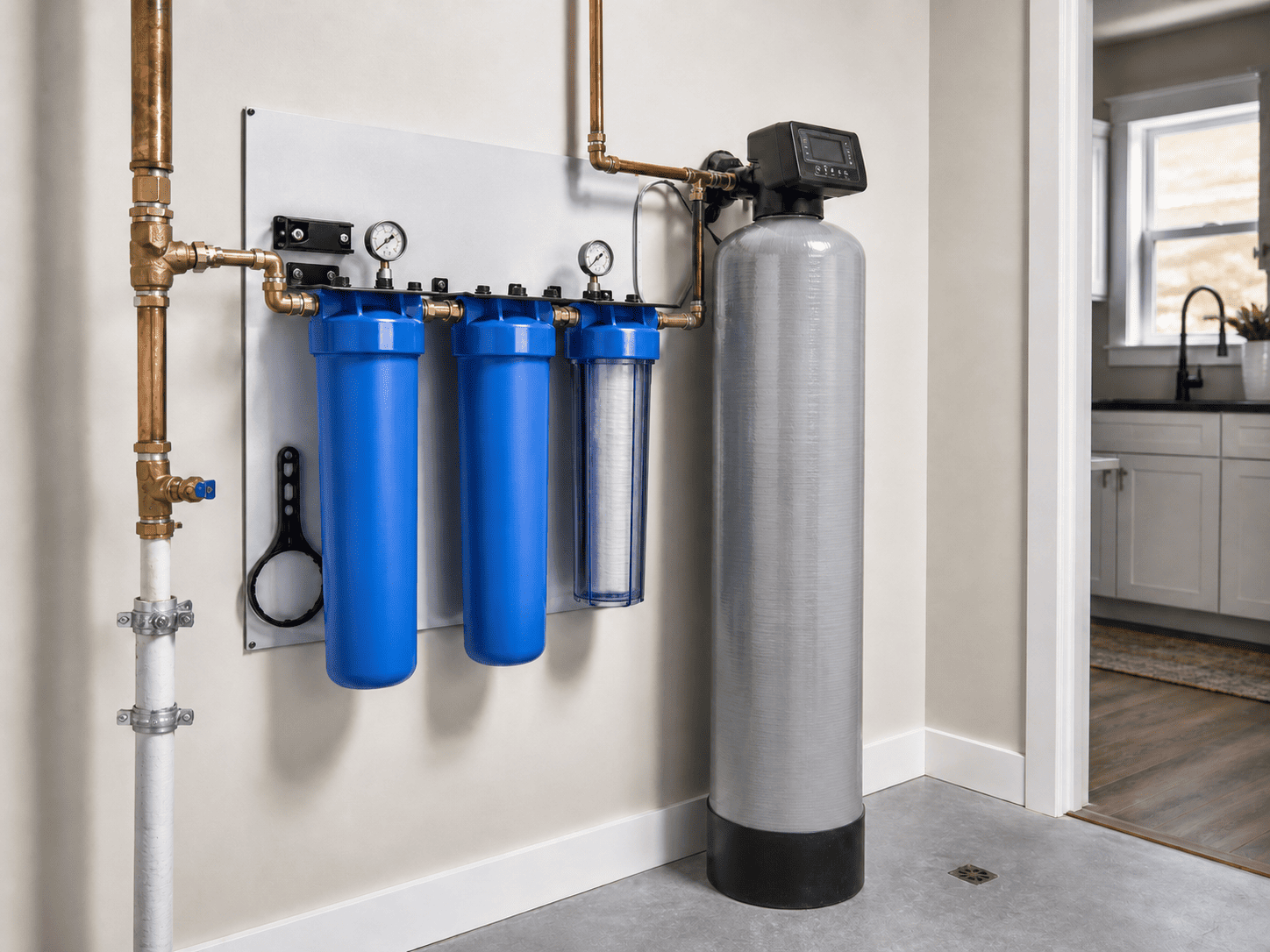
That’s where whole home filtration systems can make sense. Instead of focusing on a single point of use, these systems are designed to treat water as it enters the home. The exact filtration method depends on the water-quality issue, so professional assessment is useful here.
It’s worth remembering that filtration isn’t one-size-fits-all. Different filter media are designed for different purposes. Sediment filtration, carbon filtration, iron removal, and other treatment approaches each have their place. The best system is the one that addresses an actual need rather than simply adding equipment for the sake of it.
Don’t Forget the Water You Drink
Whole-house treatment and drinking-water treatment are related, but they aren’t necessarily the same thing.
Some homeowners want an extra level of treatment for the water they consume directly. That might mean reducing certain dissolved substances, improving taste and odor, or adding a dedicated filtration stage under the kitchen sink.
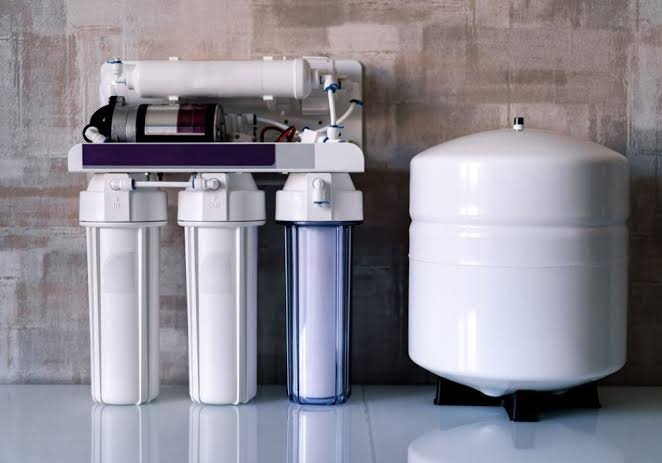
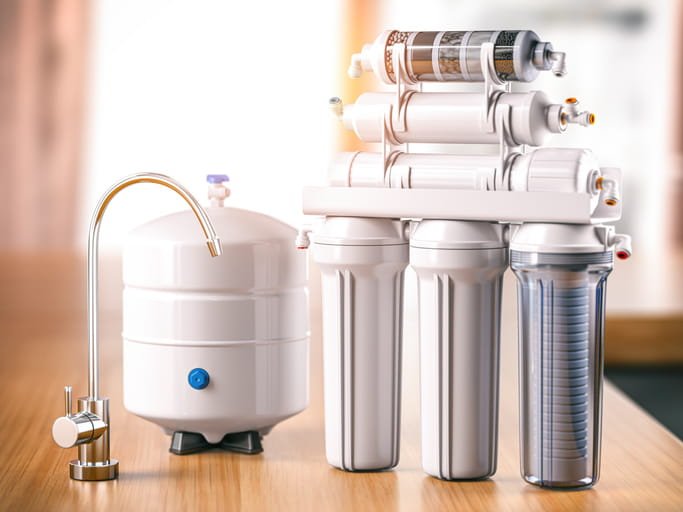
Modern drinking water systems come in several forms, including point-of-use filtration and reverse osmosis. Reverse osmosis, for example, uses a semipermeable membrane to reduce many dissolved contaminants from water. It can be particularly useful when testing shows that more extensive purification is appropriate.
But there’s a practical side to consider too. These systems require filter or membrane replacement, and some produce wastewater as part of their operation. A good installation takes those details into account rather than treating the equipment as a set-it-and-forget-it appliance.
Think About Maintenance Before Installation
This is the part people sometimes overlook when shopping for water treatment.
A new system can look impressive on installation day, but its performance months or years later depends heavily on maintenance. Filters become loaded. Softener components need attention. Membranes eventually require replacement. Connections and settings may need inspection.
Before choosing a system, ask what routine service involves. How often do filters need changing? What parts are consumable? Is professional maintenance recommended? Are replacement components readily available?
These aren’t glamorous questions, admittedly, but they can save plenty of frustration later.
Efficiency Matters, Too
Water treatment technology has changed considerably. Today’s equipment can be designed with water use, salt consumption, energy use, household demand, and regeneration cycles in mind.
For example, a properly sized softener can be programmed according to household water usage rather than operating on an unnecessarily frequent schedule. Filtration systems can also be selected based on flow requirements, ensuring that the treatment equipment doesn’t become a bottleneck when several fixtures are running.
That’s important in a busy home. Nobody wants to discover that the shower pressure drops dramatically every time someone starts the washing machine.
Good Water Treatment Starts With Good Questions
It’s tempting to compare equipment by brand names, prices, or impressive-looking specifications. Those things have their place, but they shouldn’t be the starting point.
A better conversation begins with questions: What problem are you experiencing? What does the water test show? How many people live in the house? Do you use well water or municipal water? Are there specific concerns with drinking water, bathing, appliances, or taste?
The answers help narrow down the solution.
In some homes, a softener may be the main improvement needed. In others, filtration could be more appropriate. Some households may benefit from combining whole-home treatment with dedicated drinking-water purification. There isn’t one universal setup that makes sense for everyone.
A Smarter Approach to Better Water
Water treatment doesn’t have to become an overwhelming home-improvement project. In fact, the smartest approach is usually fairly straightforward: understand the water first, identify the genuine problems, then choose treatment equipment around those findings.
That approach can prevent unnecessary purchases and make the system easier to maintain over the long run. More importantly, it puts the focus where it belongs — on how the water actually behaves in your home and how your family uses it.
Good water should fit quietly into everyday life. You shouldn’t have to think about it every time you fill a glass, wash your hands, or start the laundry. When the treatment system is properly selected and maintained, that’s often exactly what happens: the strange taste disappears, the scale becomes less of a nuisance, and water simply works the way you expect it to.